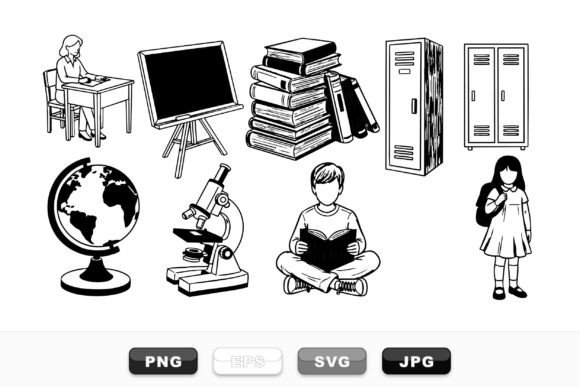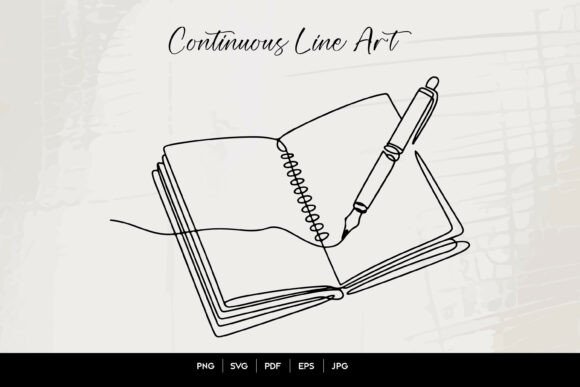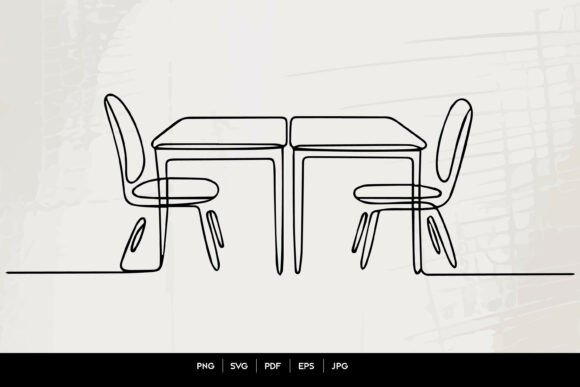
Classroom Desks Line Art Graphics for Education Crafts
Evaluating Nostalgic Academic Aesthetics for Local Tutoring Brands
As a brand designer specializing in visual identities for local service providers and educational entrepreneurs, I approach every new graphic design asset with a critical eye toward commercial viability. When reviewing the Classroom Desks and Chairs Line Art collection, my immediate assessment focuses on its potential to anchor a cohesive brand identity for tutoring centers, homeschooling co-ops, or educational stationery businesses. The line art style evokes a specific mood: structured yet accessible, nostalgic but clean. It avoids the chaotic clutter often associated with school-themed clipart, offering instead a refined, minimalist aesthetic that suggests professionalism and clarity. For a small business owner launching a learning center or an Etsy shop selling study planners, this asset communicates organization and academic focus without feeling juvenile. The single-weight line work creates a sense of modern elegance, making it suitable for brands that want to appear established and trustworthy rather than playful or cartoonish.
Strategic Applications in Packaging Design and Print Collateral
In real-world commercial design projects, versatility is paramount. I recently evaluated this asset for a client rebranding their private SAT prep service and accompanying study guide product line. The inclusion of multiple file formats—specifically SVG and EPS—is non-negotiable for professional branding. The vector-based SVG design allowed me to scale the desk illustrations infinitely for large-format signage without pixelation, while the high-resolution PNG files were perfect for digital social media graphics. For physical product packaging, such as shrink-wrapped workbook covers or branded tote bags, the clean lines of the Classroom Desks and Chairs Line Art served as an excellent secondary pattern element. We utilized the furniture motifs as subtle background textures on thank-you cards and certificate folders, reinforcing the educational theme without competing with primary typography.
For handmade sellers creating physical goods like laser-cut wooden bookmarks or enamel pins, the PDF and JPG options provide immediate reference points for production. However, the true value lies in using these graphics to establish visual hierarchy. On a product label for a "Focus & Study" candle or essential oil blend targeting students, the desk illustration acts as a visual anchor, instantly signaling the product's purpose before the customer even reads the text. This immediate recognition is vital for shelf appeal in crowded retail environments or competitive online marketplaces. By integrating these academic visuals into hang tags and price lists, local businesses can create a unified unboxing experience that builds customer trust and perceived value.
Enhancing Digital Presence and Marketing Visuals
Beyond print, this graphic design asset excels in digital applications. Social media managers will find the transparent PNG files particularly useful for overlaying onto Instagram stories or Pinterest pins promoting back-to-school sales. The line art style pairs exceptionally well with solid color blocks, allowing for easy customization to match existing brand palettes. In web design, these illustrations can break up dense text on service pages or serve as custom icons for navigation menus. Unlike generic stock photos, using consistent line art across a website creates a bespoke feel that elevates the overall user experience. For Canva template creators, these assets are gold; they provide the structural educational elements needed to build sellable templates for teachers and coaches without requiring users to draw from scratch.
Optimizing Placement for Maximum Brand Impact
Knowing where to place Classroom Desks and Chairs Line Art is just as important as having the files. Based on my testing, this asset performs best as a supporting visual element rather than a standalone logo mark. It shines in decorative borders, footer accents on letterheads, and watermark overlays for digital downloads. For boutique owners selling vintage-inspired school supplies, placing the chair or desk graphic centrally on kraft paper packaging enhances the rustic, artisanal vibe. Conversely, for modern tech-forward tutoring apps, using the asset in a monochromatic color scheme against negative space reinforces a sleek, contemporary identity. The key is to let the simplicity of the line work breathe; overcrowding the design diminishes its sophisticated charm.
Navigating Limitations and Contextual Risks
Despite its strengths, this asset requires careful handling. I would advise against using it for formal corporate university branding or luxury high-end education consulting, where the line art might read too casual or craft-oriented. Additionally, because the lines are uniform in weight, they can disappear when printed at very small sizes on low-quality paper or viewed on low-resolution screens. Always test the minimum viable size before committing to a product label layout. Avoid placing these detailed furniture illustrations directly behind complex ingredient lists or legal disclaimers; the visual noise will reduce readability and frustrate customers. Furthermore, if your brand relies on vibrant, multi-colored gradients, this strictly linear asset may feel disjointed unless stylized intentionally. It works best with flat colors, duotones, or simple stroke modifications.
Technical Due Diligence for Commercial Design Projects
Before integrating Classroom Desks and Chairs Line Art into any client project or product for sale, rigorous technical validation is essential. First, verify the commercial license terms. Just because an asset is available on a creative marketplace does not automatically grant rights for resale on physical merchandise or unlimited digital distribution. Protect your business by confirming usage limits. Second, inspect the vector nodes in the EPS or SVG files. Clean, optimized paths are crucial for laser cutting and vinyl plotting; messy vectors can cause machine errors or jagged edges on finished crafts. Third, test the PNG transparency. Ensure there are no white halos or artifacting around the edges, which look unprofessional on colored backgrounds.
- Font Pairing Tests: Evaluate the asset beside serif fonts for a traditional academic look, sans-serif fonts for modern clarity, and handwritten scripts for a personalized tutoring feel. Ensure the line weight of the art balances with the stroke width of your chosen typeface.
- Print Quality Checks: Always run a physical proof. Screen brightness deceives; ink spread on uncoated paper can thicken fine lines. Adjust stroke weights in the vector file if necessary before mass printing.
- Competitor Analysis: Search local competitors to ensure this specific asset isn't already saturated in your niche. Unique branding requires distinctiveness; if everyone uses the same desk clipart, consider modifying the color or composition to maintain originality.
- Mockup Validation: Never finalize a design without testing it on a realistic product mockup. Seeing the Classroom Desks and Chairs Line Art wrapped around a curved mug or folded on a textured notebook reveals scaling issues that flat screens hide.
Building Trust Through Consistent Visual Storytelling
Ultimately, the goal of incorporating Classroom Desks and Chairs Line Art into your small business branding is to foster connection. For parents seeking tutors, these familiar shapes trigger positive associations with learning environments. For students buying organizational tools, they signal utility and focus. When used strategically across touchpoints—from the initial social media ad to the final unboxing moment—these graphics transform from simple decorations into powerful communication tools. They tell a story of dedication, structure, and educational support. By treating this asset with the same rigor as custom illustration, local entrepreneurs can achieve professional branding results that resonate deeply with their target audience, driving both recognition and revenue. Remember, successful commercial design isn't just about aesthetics; it's about solving business problems through intentional visual choices.